
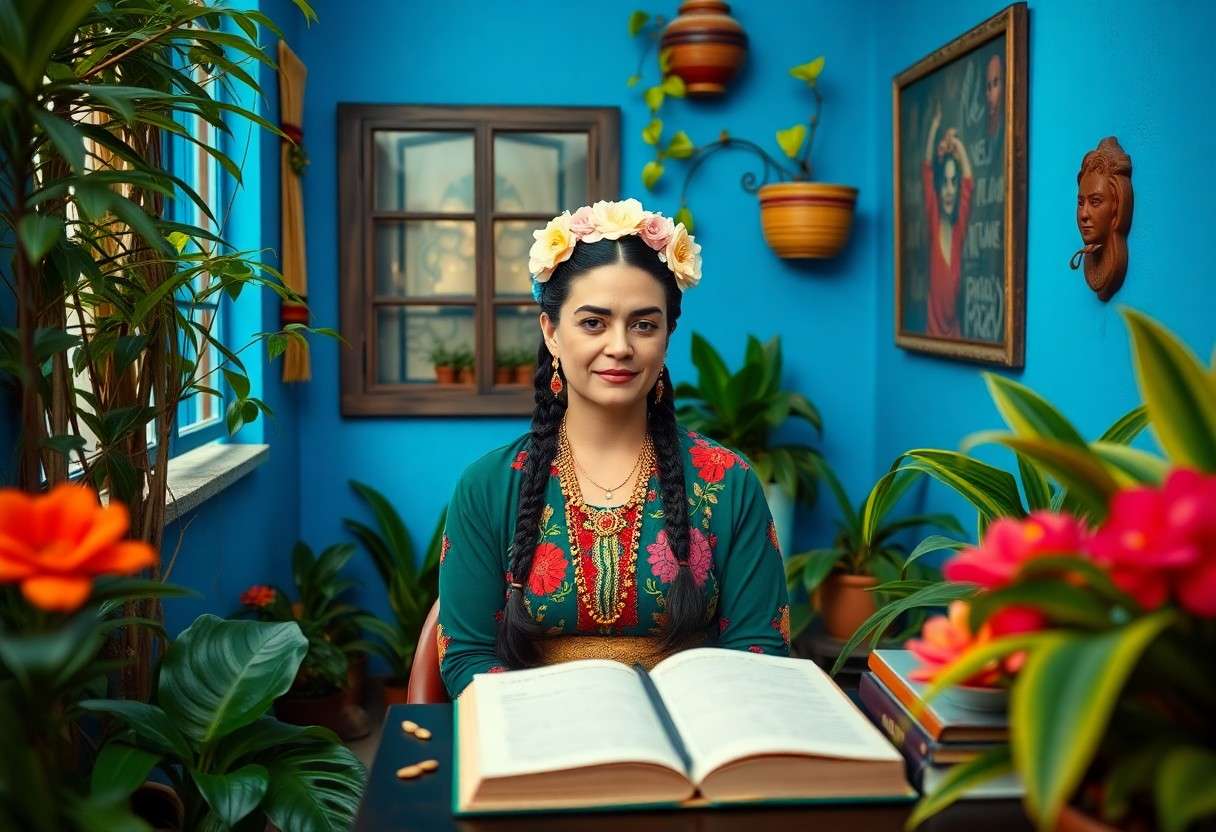
Diary entries reveal the intimate struggles and triumphs of Frida Kahlo, a woman whose artistry transcended her remarkable pain and passion. You will uncover the challenges she faced due to physical disabilities and her tumultuous relationship with Diego Rivera, along with the celebration of her vibrant identity and love for Mexican culture. As you explore her private life, you will see how these experiences shaped her iconic status in art and feminist discourse, allowing you to appreciate the depth behind her powerful creations.
The Private Life of Frida Kahlo – A Diary of an Icon
Frida’s Family Heritage
While submerging into the early life of Frida Kahlo, you’ll discover that her family heritage plays a significant role in shaping the artist she would become. Alongside her mother, Matilde, of Spanish descent, you will find that her father, Guillermo Kahlo, was a German immigrant who had a profound influence on Frida’s artistic sensibilities. This blend of cultures provided a unique backdrop that instilled in her the duality of experience, informing her later works with a mixture of traditional Mexican and European influences.
Additionally, her family lived in Coyoacán, then a tranquil suburb of Mexico City. This setting cultivated her fascination with local traditions and folklore. You can sense how this environment nurtured her creativity and shaped her identity, allowing her to draw inspiration from her roots and the vibrant surroundings that fueled her imagination.
Childhood Experiences
For Frida, childhood wasn’t without its challenges and significant moments that would later echo through her artwork. Along with her close siblings, she engaged in playful competitions and artistic pursuits, which fostered a sense of creativity and camaraderie both in her home and later in her professional life. Much of her early inspiration sprouted from her interactions within this loving family unit, where imagination and art were consistently encouraged.
Also, her experiences were tinged with unique social pressures and expectations, especially being a female in a predominantly male sphere. The very act of engaging with her surroundings—whether it was birds and nature or the struggles of childhood—provided a deep well of emotional depth that would later surface in her artwork.
Early Health Challenges
After her early years filled with creative discovery, Frida faced a series of significant health challenges that would redefine her life journey. At the age of six, she contracted polio, resulting in her right leg developing more slowly than the left, which left her with a lasting physical disability. This condition often made her feel alienated from her peers, but it also ignited a fire within her to overcome obstacles, showcasing a sense of resilience that became a hallmark of her character.
It is crucial to note that these early health challenges, while daunting, became pivotal moments that shaped your understanding of both pain and strength. They guided her to explore her identity and develop a profound empathy for those around her, fueling a desire to express herself artistically. Such experiences not only enriched her body of work but also connected her deeply with the universal themes of suffering and transformation that resonate throughout her art.
Artistic Evolution
You are about to explore the transformative journey of Frida Kahlo as she navigated her path through art. Her unique style sprang from a blend of personal experiences, cultural influences, and the deep emotional turmoil she encountered throughout her life. To gain a better understanding of this, you might find insights in The Diary of Frida Kahlo: An Intimate Self-Portrait, which serves as a vital resource for uncovering the essence of her thoughts and artistic processes.
Influence of Mexican Culture
To appreciate Frida Kahlo’s artistic evolution, you must acknowledge the profound influence of Mexican culture on her work. Born and raised in the vibrant setting of Coyoacán, Mexico, Frida was deeply connected to her roots. She incorporated elements of traditional Mexican folk art, vibrant colors, and symbolism into her paintings, which became a reflection of her identity. Throughout her career, she wore traditional Tehuana clothing and often depicted Mexican cultural icons and mythology, solidifying her role as a major figure in the celebration of Mexican heritage.
To Kahlo, art was not just an expression but also a means of articulating her political beliefs and advocating for her country’s rich cultural narrative. This connection to her heritage not only influenced her aesthetic choices but also imbued her work with a strong sense of nationalism, offering a unique lens through which to view the interplay between culture and personal identity.
The Impact of Pain and Suffering
Pain played an integral role in shaping Frida Kahlo’s artistic vision. From a young age, she faced significant health challenges, including polio and a severe bus accident that left her with chronic pain and physical disabilities. This constant battle with her own body propelled her to explore themes of suffering, loss, and resilience through her art. Kahlo’s paintings often serve as visual metaphors for her emotional and physical turmoil, revealing a raw and deeply personal narrative that resonates with many.
Suffering was not merely a backdrop but the very essence of her creative process. It compelled her to confront difficult truths about herself, her relationships, and her place in the world. This tumultuous exploration resulted in hauntingly beautiful works that depict both her inner suffering and the struggles of the human condition, allowing viewers to connect with her experience on a profound level.
Key Works and Their Significance
Across Kahlo’s artistic repertoire, several key works stand out as landmarks of her evolution. Paintings such as “The Two Fridas” and “Self-Portrait with Thorn Necklace and Hummingbird” reveal the emotional complexity of her experiences and explore themes of duality, identity, and existential despair. They serve not only as self-portraits but also as universal symbols of struggle and resilience, inviting viewers to investigate into the depths of their own emotions.
Due to Kahlo’s ability to intertwine her personal narrative with broader themes of pain and culture, her artworks resonate on multiple levels. They transcend time and place, making them relevant to various audiences even today. With each brushstroke, she invites you to witness her reality, transforming personal suffering into a source of collective strength and inspiration in the face of adversity.
Relationships and Personal Life
Many aspects of Frida Kahlo’s personal life shaped her artistry and public persona. As you explore her relationships, you’ll encounter love, heartbreak, and deep emotional connections that influenced the themes and emotions expressed in her work. These elements not only defined her identity but also contributed to her status as a profound cultural icon.
Marriage to Diego Rivera
Personal dynamics played a significant role in Frida’s marriage to Diego Rivera. Their union was as passionate as it was tumultuous, marked by intense love, betrayal, and artistic collaboration. You should be aware that they originally married in 1931, but their relationship was characterized by infidelities on both sides. This rollercoaster of emotions is often reflected in Frida’s paintings, which are filled with visceral imagery and intense symbolism that lay bare her feelings.
Throughout their time together, Diego’s larger-than-life personality clashed with Frida’s fierce spirit. Yet, this complicated relationship fueled her creativity. You’ll discover that despite their separation in 1939, they remarried a year later, emphasizing a deep bond that transcended conventional expectations. It was this connection that profoundly inspired her artistic output during her most challenging times.
Other Significant Relationships
Personal connections outside her marriage also played a significant role in shaping Frida Kahlo’s experiences. Throughout her life, you’ll find that she had meaningful relationships with various artists and intellectuals, including renowned figures like Pablo Picasso and Leon Trotsky. These connections further enriched her artistic perspective and kept her constantly engaged with the broader art community.
With friendships that explored into both romantic and platonic territories, Frida cultivated an environment where her personal life intertwined with her artistic expression. Her relationships were not just significant but crucial in understanding her complex identity, ultimately informing the emotions and narratives presented in her artwork.
Impact of Personal Life on Art
Diego Rivera’s presence in Frida Kahlo’s life had a profound impact on her creative output. You will find that many of her paintings are imbued with a sense of longing and emotional depth, often depicting her personal struggles and the effects of her tumultuous relationship with Diego. Her art served as a mirror to her life, where pain, passion, and resilience converged into powerful imagery.
Plus, the significant events in her personal life, including her numerous physical ailments and emotional traumas, became focal points in her work. This intimate relationship between her experiences and her art is what distinguishes her as an icon; you can directly trace her feelings of isolation, desire, and suffering through her vivid and sometimes shocking self-portraits, ultimately solidifying her legacy as a groundbreaking artist and a profound voice for women.
Political Engagement
Despite her profound struggles with personal identity and health, Frida Kahlo was not just an artist; she was a political force eager to engage with the social issues of her time. Your understanding of her life is incomplete without acknowledging the importance of her politics, which were seamlessly interwoven into her art and daily existence. Kahlo played an active role in various political movements, providing a voice against oppression and injustice while maintaining her unique artistic expression.
Frida Kahlo’s Political Ideals
With a deep commitment to communism and socialist principles, Frida’s political ideals were steeped in her early exposure to radical thought. Growing up during the Mexican Revolution, she developed a strong sense of nationalism and believed in fighting for the rights and dignity of the oppressed. Your perception of her art can often be a reflection of her unwavering advocacy for the working class, where she typically portrayed themes associated with identity, loss, and the political struggles faced by her people.
Involvement in Causes and Movements
Ideals often translate into actions, and Frida Kahlo was no exception. She became heavily involved in various political movements, aligning herself with the Mexican Communist Party and participating in demonstrations that fought against inequality. Kahlo’s passion for these causes helped to amplify the voices of indigenous people and women, prompting discussions on human rights both in Mexico and internationally. As you explore her life, you will find that her activism forged strong connections and friendships with prominent political figures, including Leon Trotsky, to whom she offered refuge at her home.
Movements such as the Mexican Revolution and the struggles for workers’ rights significantly influenced Kahlo’s life and art. Her passionate involvement in these causes led her to utilize her creative outlets as platforms for her political messages. This combination of artistry and activism allowed her to express the complexities of her beliefs, pushing you to think critically about the relationship between personal experience and broader societal issues.
Reflection of Politics in Art
An important characteristic of Kahlo’s artistic legacy is the manner in which her political views are interwoven into her work. Each stroke of her brush not only tells a personal story but also comments on the societal injustices she observed. You may notice how her self-portraits speak volumes about identity and the challenges faced by marginalized groups while serving as a direct critique of the government and societal norms of her time. Kahlo employed vivid imagery and symbolism to highlight her beliefs, compelling you to examine deeper into the narratives behind her art.
It’s fascinating to consider how her tumultuous journey as a woman, a lover, and an activist manifest in her artwork, where straightforward political commentary becomes a nuanced exploration of her internal battles. By engaging with Kahlo’s work, you immerse yourself in the emotional layers that reveal her struggles and triumphs. From the portrayal of her indigenous heritage to depictions of the human condition, every piece invites you to engage with the politics of identity and social justice, making her a timeless figure in both art and activism.
Health Struggles and Resilience
Your understanding of Frida Kahlo’s iconic status cannot be fully formed without acknowledging the health challenges that shaped her life and artistry. Her resilience in the face of adversity not only defines her personal narrative but also infuses her artwork with profound depth. This chapter explores into her significant health struggles, highlighting how they impacted her life and creative expression.
Impact of Polio on Frida’s Life
About the age of six, Frida contracted polio, which left her with a lifelong disability. The illness affected her right leg, causing it to be thinner than her left and leading to a lifetime of discomfort and pain. This early experience of illness would become a recurring theme in her life, influencing both her physical appearance and her emotional landscape. You may find it interesting that despite these challenges, Frida demonstrated an early spirit of defiance, choosing to participate in sports and physical activities that many would have deemed inappropriate for someone with her condition.
About her childhood, Frida developed a strong connection with her father, who encouraged her independence and taught her to embrace her uniqueness. This bond not only fostered her rebellious nature but also instilled in her the determination to overcome her physical limitations, setting the stage for her future as an artist. The experiences of isolation and struggle influenced her worldview, contributing to the themes of suffering and resilience that would later emerge in her work.
The Bus Accident and Its Aftermath
Between the ages of 18 and 19, Frida’s life took a significant turn when she was involved in a catastrophic bus accident. The incident left her with numerous severe injuries, including a broken spine, collarbone, ribs, and pelvis. Your appreciation for Kahlo’s art may deepen when you realize that this traumatic event forced her into a long period of recovery and rehabilitation, during which she was confined to her bed for extended periods. The physical pain from her injuries would haunt her for the rest of her life, reflecting the harsh realities of her existence through her artwork.
Life during her recovery was arduous, filled with countless surgeries and a reliance on custom-built medical equipment. Despite the overwhelming physical challenges, the incident proved to be a pivotal moment for Frida. It was during this time that she began to paint seriously, using her art as a form of emotional and physical healing. This transformative process allowed her to channel her pain and suffering into something beautiful, giving voice to her experiences while inspiring countless others.
How Illness Shaped Her Art
To understand Frida Kahlo’s artistry, you must recognize the profound impact of her physical ailments on her creative expression. Her paintings often serve as a raw, poignant response to her struggles, filled with symbols of pain, identity, and personal experience. The heartache she faced was not merely an anchor, but a catalyst that spurred her into creating bold, intimate works that explore themes of suffering and death, intertwined with her cultural and personal identity. You might find her self-portraits particularly striking, as they reveal an unfiltered view of her inner turmoil and resilience.
Hence, the connection between illness and art in Kahlo’s life is profound. Her body of work acts as both a documentary of her physical struggles and a source of empowerment. Every brushstroke narrates her story of endurance amidst pain. By confronting her suffering head-on through art, she transformed her challenges into an everlasting legacy that continues to resonate with people today. Kahlo’s illness thus became not just a part of her identity, but an integral force behind her artistic output, shaping her style and themes to reflect her undeniable strength.
Frida Kahlo as an Icon
After exploring the personal life of Frida Kahlo, it becomes clear how her intimate experiences shaped her public persona and artistry, ultimately making her an enduring icon. Known for her striking self-portraits and vibrant use of color, Kahlo’s work goes beyond aesthetics; it serves as a powerful medium for exploring complex themes, including identity, pain, and resilience. You may find it fascinating how she became a symbol for various movements, connecting deeply with those who resonate with her struggles and victories.
Feminism and Gender Identity
Below the surface of her artistry lies a profound exploration of feminism and gender identity. Kahlo’s personal experiences with physical and emotional pain are often depicted in her paintings, creating a raw and relatable narrative for women experiencing similar struggles. Her work challenges traditional gender roles and speaks to the intersectionality of identity, highlighting the importance of self-exploration and a woman’s quest for autonomy. You’ll find that her unapologetic embrace of her bisexuality and her complex relationship with gender norms contributes to her status as a feminist icon.
Though she faced adversity throughout her life, including debilitating health issues and tumultuous relationships, Frida Kahlo transformed her suffering into art, which became a source of empowerment for many. In a time when women were often marginalized, her bold portrayal of self-defiance and individuality paved the way for future generations to embrace their truths, making her an everlasting figure in discussions surrounding the feminist movement.
Legacy and Cultural Representation
The impact of Frida Kahlo extends far beyond her lifetime, as her legacy continues to inspire artistic expression and cultural representation. Her imagery, often infused with indigenous symbols and themes that reflect her Mexican heritage, resonates with people from diverse backgrounds. Kahlo’s art serves as a powerful reminder of the beauty found in cultural identities, and it challenges the homogenization often seen in mainstream culture. You may appreciate how her work transcends borders, inviting individuals across the globe to explore their own identities through her lens.
Gender and her cultural influences are crucial in maintaining her relevance in today’s society. The willingness to embrace and celebrate her roots has turned Kahlo into a cultural icon reflective of both feminism and Mexican identity, which keeps attracting new audiences who find strength in her story. As you probe into her legacy, you might see how this representation resonates with current conversations about femininity and cultural pride.
Popularity in Contemporary Society
Beside the fierce dialogues surrounding feminism and cultural representation, Frida Kahlo’s popularity in contemporary society illustrates a powerful connection between artists and audiences. Through blogs, social media, and merchandise, her image has become ubiquitous, making her style and symbolism instantly recognizable. You might notice that her iconic unibrow and vibrant floral headdresses are often celebrated or imitated, further solidifying her place as a fashion icon as well.
Her art attracts a diverse array of followers, as people are drawn to both her style and her story. This multifaceted appeal allows you to uncover various interpretations of her work, highlighting how it continues to spark conversations about identity, culture, and resilience. As you engage with her narrative, it becomes clear that her influence is not merely confined to the walls of galleries; it resonates throughout popular culture.
Further emphasizing her status, Kahlo’s image has flooded social media platforms, inspiring countless forms of modern artistry. Whether it’s through tattoos, mural installations, or clothing designs, her essence remains alive in contemporary creativity. This evolution of her imagery demonstrates how the personal can become universal, allowing you to appreciate the strength in vulnerability that she embodied.
To wrap up
Now that you have explored “The Private Life of Frida Kahlo – A Diary of an Icon,” you can appreciate the rich tapestry of emotions, struggles, and triumphs that shaped Kahlo’s life and artistry. This intimate glimpse into her diary offers you not just a reflection of her thoughts and feelings, but also an understanding of the cultural and personal influences that informed her unique perspective. Engaging with her story allows you to connect with her in a more profound way, enhancing your comprehension of her artwork and the enduring legacy she has left.
Furthermore, as you investigate into Kahlo’s complex world, you can recognize the universal themes of identity, pain, and passion that resonate with many individuals today. Her candid expression of vulnerability and strength can inspire you to consider your own experiences in a different light. By understanding her private life, you gain insights that can enrich your appreciation of her public persona as one of the most iconic and influential figures in art history.